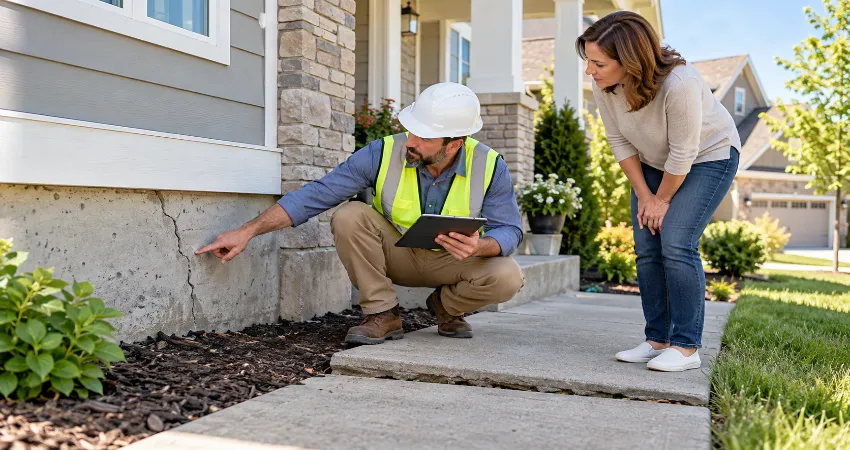
Foundation problems can be difficult for homeowners to judge because the most visible symptom is not always the actual problem. A thin concrete crack may be related to normal shrinkage, while a combination of sloping floors, sticking doors, wall separation, and widening cracks may point to foundation movement. The difference matters because foundation repair costs can range from a relatively small crack repair to a major stabilization project involving piers, excavation, drainage improvements, and engineering.
For homeowners, the smartest first question is usually not, “How much will this crack cost to fix?” A more useful question is, “What caused the movement, and is it still happening?” Foundation performance depends on both the structure and the soil supporting it. Water movement, expansive soil, poorly compacted fill, erosion, construction deficiencies, and changing moisture conditions can all contribute to settlement or displacement. Correctly identifying the cause can prevent money from being spent on a repair that treats only the visible symptom.
This guide explains realistic foundation repair costs, the factors that change the final price, warning signs that deserve professional attention, and when hiring an independent structural engineer can be especially valuable.
How Much Does Foundation Repair Cost?
In the United States, many residential foundation repair projects fall roughly between $2,200 and $8,200, with national averages around $5,000. These numbers are useful for early budgeting, but they should never be treated as a prediction for a specific house. Minor crack work can cost only a few hundred dollars, while serious settlement requiring underpinning or multiple structural supports can reach tens of thousands of dollars.
Recent 2026 cost data from Angi places typical foundation repairs around $2,225 to $8,133, while Fixr reports a national range of about $2,200 to $8,200. The similarity is useful for general budgeting, although individual projects can fall well outside those ranges.
Typical Foundation Repair Costs by Method
The repair method is often a larger cost driver than the size of the crack itself. A contractor may be able to seal a nonstructural crack without excavation, while foundation settlement may require equipment, excavation, hydraulic lifting, or supports extending into more stable soil.
| Repair Type | Typical Cost Range |
|---|---|
| Crack sealing or injection | $200 to $1,000 |
| Slab jacking or lifting | $500 to $1,900 |
| Foundation waterproofing | $2,400 to $7,000+ |
| Wall reinforcement | $4,000 to $12,000+ |
| Foundation tiebacks | $5,000 to $15,000+ |
| Underpinning or pier installation | $10,000 to $40,000+ |
These figures are broad national estimates rather than quotations. Underpinning can become particularly expensive because multiple support points may be required, and access around the building can affect excavation, equipment placement, labor, and restoration costs.
What Actually Determines Foundation Repair Cost?
The severity of the damage is important, but it is only one part of the estimate. Foundation type, soil characteristics, drainage, accessibility, structural load, local labor rates, permits, engineering requirements, and the amount of interior or exterior restoration can all change the total.
🔥 এই লেখাগুলো অবশ্যই পড়ুন


A basement wall with lateral movement, for example, requires a different evaluation from a settled slab. A pier-and-beam home may require work on deteriorated supports or beams, while a slab-on-grade home experiencing differential settlement could require lifting or underpinning. Difficult access for drilling equipment or excavation can increase labor even when two homes have similar visible damage.
The Hidden Cost Driver: Soil and Water
One of the most useful ways to understand foundation problems is to stop looking only at the concrete. The supporting soil is part of the foundation system. The International Code Council describes the foundation structure and supporting soil as interdependent components that transfer building loads into the ground.
Water can change how that soil behaves. Expansive soils may swell when wet and shrink as they dry. Poor drainage can contribute to hydrostatic pressure against basement walls. Erosion or movement of soil beneath a footing can reduce support. This is why simply filling a crack without identifying its cause may produce a neat-looking surface while leaving the original problem unresolved.
Foundation Cracks That Deserve More Attention
Not every crack indicates structural failure. Small shrinkage or hairline cracks can occur in concrete and finishes. What matters is the pattern, location, width, surrounding symptoms, and whether the crack appears to be changing.
Diagonal cracking around windows or doors, stair-step cracking through masonry, significant horizontal foundation-wall cracking, displacement across a crack, repeated reopening after repair, and cracks accompanied by uneven floors deserve closer investigation. Older HUD residential guidance also notes that differential settlement becomes more concerning when movement affects connected structural elements such as beams, joists, floors, or roofs.
When Should You Call a Structural Engineer?
A structural engineer becomes especially useful when the question goes beyond cosmetic repair and involves structural movement, load support, or the appropriate stabilization method. Consider an engineering evaluation when multiple signs appear together, when cracks continue to grow, when floors noticeably slope, when foundation walls bow or shift, or when doors and windows suddenly stop operating normally in several areas of the home.
An engineer may also be valuable before approving a major repair proposal. A foundation repair company normally earns revenue from performing repair work. An independent engineer is typically being paid to evaluate the structure and recommend an appropriate technical response. That distinction can be useful when proposed work includes expensive pier systems, wall stabilization, or other structural alterations.
How Much Does a Structural Engineer Cost?
A basic residential structural engineering inspection commonly costs several hundred dollars. Current HomeAdvisor data reports an average of about $555, with many projects between approximately $344 and $776. More complex investigations, calculations, drawings, monitoring, or written engineering reports can cost considerably more.
That extra expense may be worthwhile when a homeowner is considering a repair costing thousands or tens of thousands of dollars. The goal is not simply to obtain another opinion. It is to establish what is moving, why it may be moving, whether stabilization is necessary, and what repair objectives should be included in contractor bids.
A Better Process Before Approving Major Foundation Work
Start by documenting the symptoms. Photograph cracks with dates, note sticking doors or windows, record areas where floors feel uneven, and check whether gutters and downspouts discharge water near the foundation. Do not repeatedly patch an active crack before its movement has been evaluated because the crack pattern itself may provide useful diagnostic information.
For a significant problem, consider obtaining an independent structural assessment before requesting final repair proposals. Then ask multiple qualified contractors to bid on the same general repair scope. Comparing contractors becomes much easier when everyone is responding to the same structural objective rather than proposing completely different solutions.
Do Not Forget Drainage After the Structural Repair
A structural repair can stabilize a building without correcting the environmental condition that contributed to the problem. Gutters, downspouts, grading, surface drainage, underground drainage, plumbing leaks, and groundwater conditions may therefore need attention as part of a long-term plan.
The objective should be a complete solution: identify the cause, stabilize the structure where necessary, manage damaging moisture or soil conditions, and monitor the home afterward. That approach is usually more useful than selecting a repair only because it has the lowest initial price.
Frequently Asked Questions
1. Is every foundation crack a serious structural problem?
No. Concrete and masonry can develop minor shrinkage or settlement cracks that do not indicate major structural failure. However, the pattern and surrounding conditions matter. A widening crack, significant displacement, stair-step masonry cracking, or a crack accompanied by sloping floors or sticking doors should receive professional evaluation rather than being judged by appearance alone.
2. How much does a small foundation crack cost to repair?
Basic crack sealing or injection may cost roughly $200 to $1,000 depending on access, crack length, material, and whether water intrusion must also be addressed. The important issue is determining whether the crack is stable. Repairing the surface of an actively moving structural crack will not correct the underlying movement.
3. What is usually the most expensive foundation repair?
Underpinning and major stabilization work are among the most expensive residential foundation repairs because they may require excavation, lifting, specialized equipment, engineering, and multiple piers or support points. Large projects can cost tens of thousands of dollars depending on the structure and soil conditions.
4. Should I call a foundation contractor or structural engineer first?
For a minor, clearly nonstructural maintenance issue, a qualified foundation contractor may be sufficient. When there is visible movement, multiple structural symptoms, a bowing wall, significant settlement, or an expensive repair recommendation, an independent structural engineer can provide a useful diagnosis before major work is authorized.
5. Can foundation problems get worse if I wait?
Some foundation movement eventually stabilizes, while other movement continues because the underlying soil, moisture, drainage, or structural condition remains active. Since homeowners usually cannot determine this from appearance alone, progressive cracking or changing floor and wall conditions should be evaluated instead of simply being monitored indefinitely.
6. Can poor drainage cause foundation damage?
Yes. Poor drainage can change soil moisture, increase pressure against below-grade walls, contribute to erosion, and allow water into basements or crawl spaces. Maintaining gutters, extending downspouts appropriately, correcting problematic grading, and addressing drainage problems can therefore be important parts of foundation maintenance.
7. Does homeowners insurance normally pay for foundation repair?
Coverage depends on the policy and the cause of the damage. Gradual settlement, soil movement, or maintenance-related problems are often treated differently from sudden covered events. Homeowners should review the exclusions and covered causes in their own policy and obtain a written coverage determination when a significant claim is involved.
8. Is foundation repair a good DIY project?
Cosmetic maintenance may sometimes be manageable for an experienced homeowner, but structural stabilization should not be approached as a routine DIY project. Foundation work affects the building’s load path and may involve soil behavior, reinforcement, lifting, drainage, and local code requirements. Incorrect repairs can also hide evidence needed for later diagnosis.
9. Should I get more than one foundation repair estimate?
Yes, particularly for expensive structural work. When possible, obtain a clear diagnosis first and then compare multiple qualified contractors based on repair scope, materials, installation method, warranties, permits, exclusions, and restoration work. Comparing only the final price can be misleading when contractors are proposing different solutions.
10. What should I ask before signing a foundation repair contract?
Ask what problem the repair is intended to correct, what evidence supports the proposed method, whether engineering or permits are required, how movement will be measured, what drainage work is included, what parts of the property must be removed or restored, and exactly what the warranty covers. The answers should explain the repair objective rather than simply naming a product or installation system.
Conclusion
Foundation repair costs vary widely because foundation problems have different causes and require different solutions. Minor crack work may cost only a few hundred dollars, while settlement, bowing walls, or unstable soil can lead to major stabilization work costing thousands or more. The most important step is identifying the cause before choosing the repair.
When movement appears structural, symptoms are progressing, or a major repair is being proposed, an independent structural engineer can help define the problem and provide a clearer basis for making an informed repair decision.






Be First to Comment